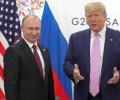
Trump reiterated that he is not negotiating on behalf of Ukraine, but rather aiming to bring the parties to the negotiating table.
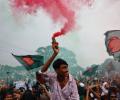
'Militants are taking over the administration. Fundamentalists have been released from jail.'
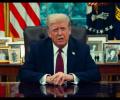
'What the US appears to be doing is to force India to be "the buyer of last resort", on whom their products can be dumped, 1.4 billion people have to eat something, so why not eat American corn?' 'What is exercising the Trump lot is the fact that most of the farms are in solidly Republican Midwestern states: Illinois, Indiana, Kansas, Michigan, Minnesota, Missouri, Nebraska, North Dakota, Ohio, South Dakota, Wisconsin,' points out Rajeev Srinivasan.
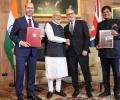
'That way you're not hostage just to US sort of exports to India.'
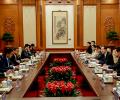
'We remain in touch with the Chinese side, in Beijing as well as in Delhi, to bring predictability in the supply chain.'
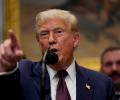
India would neither succumb to the Americans on issues of national security, such as its defence ties with Russia, nor cede ground on its domestic interests in the agriculture and dairy sectors.

India has reduced the time period for foreign investors to seek international arbitration from five years to three years as part of the recently signed investment pact with the United Arab Emirates (UAE), a departure from its model Bilateral Investment Treaty (BIT). Under the Investor-State Dispute Settlement (ISDS) mechanism, if the Indian judicial system is unable to resolve a dispute within this shortened period, investors can resort to international arbitration. The investment pact, signed on February 13 in Abu Dhabi, came into force on August 31, replacing the previous pact.
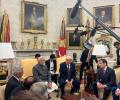
Who accompanied Prime Minister Narendra D Modi to his Thursday meeting with US President Donald J Trump in the Oval Office, and who did POTUS bring along?
Government representatives told a parliamentary panel that the US has not officially conveyed to India that it should cut tariffs by April 2.

Brendan Lynch, the assistant US trade representative for South and Central Asia, will pay a five-day visit to India beginning Tuesday, days before US President Donald Trump's tit-for-tat tariff kicks in. The senior US trade official is expected to hold talks with Commerce Minister Piyush Goyal besides meeting a number of senior Indian officials.

India on Thursday said it expects the United States to consider visa applications of Indian students on merit amid growing concerns over the Trump administration halting new student visa interviews.

Commerce and Industry Minister Piyush Goyal on Thursday asked the Indian startup community to shift their focus from grocery delivery and ice cream making to to high tech sector like semiconductor, machine learning, robotics, and artificial intelligence. He also said there is a need for more Indian investors into the startup ecosystem.
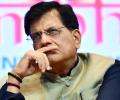
A government official said India and the US are exploring an interim trade deal within 90 days.

By threatening to punish India with high tariff, Trump is actually planting a tantalising thought in the Indian mind that the Modi government should suitably 'incentivise' him, explains Ambassador M K Bhadrakumar.
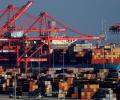
Senior officials of India and the US will begin three-day talks on the proposed bilateral trade agreement in New Delhi on Wednesday amid threats of reciprocal tariffs from the Trump-administration, an official said. To formally start the negotiations on the pact, Assistant US Trade Representative for South and Central Asia Brendan Lynch, along with a team of officials, is in New Delhi.
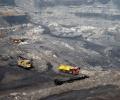
The 17 rare earth elements that are at the centre of the current crisis are critical components of everyday products -- from cars to jet engines to electronics like smartphones and flat-screen TVs.
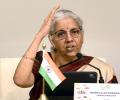
Issues related to the proposed free trade agreement (FTA) and bilateral investment treaty between India and the UK are expected to figure during the three-day visit of Finance Minister Nirmala Sitharaman to London from April 8-10, official sources said. The minister will attend a host of meetings, including the India-United Kingdom Economic and Financial Dialogue, in London.


India and the United States will finalize the contours, schedule of negotiations, and terms of reference for a proposed bilateral trade agreement (BTA) during a three-day meeting beginning Tuesday. The agreement is expected to be finalized in two tranches, with the first phase focusing on goods trade. The US team, led by Assistant US Trade Representative for South and Central Asia Brendan Lynch, will be in India from March 25-29 to discuss the agreement. Both countries are aiming to conclude the first phase of the agreement by fall 2025.

He went on to say that even though this has not been discussed, he is going to 'increase trade substantially with both of these great Nations.'
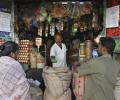
Union Minister of Commerce and Industry Piyush Goyal's recent comments on large e-commerce players have reignited the debate about their impact on smaller offline retailers. On Wednesday, Goyal said that the rapid growth of e-commerce in India is a "cause for concern" and is diminishing the market share of small, mom-and-pop stores by offering high-margin products such as consumer electronics and apparel at discounted rates.
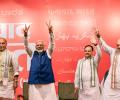
While there are some new faces in the cabinet, leaders such as BJP president JP Nadda and Jual Oram have returned as ministers.
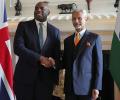
India's External Affairs Minister S Jaishankar has stated that the US administration under President Donald Trump is moving towards multipolarity, which aligns with India's interests. He also revealed that India and the US have reached an agreement on the need for a bilateral trade pact. Jaishankar touched upon various foreign policy issues including India's role in the Russia-Ukraine conflict, the trajectory of the BRICS grouping, and relations with China during a session at the Chatham House think-tank in London.

Glimpses of the At Home reception hosted by President Droupadi Murmu on Independence Day at Rashtrapati Bhavan.
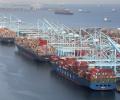
India and the US have decided to hold sector-specific talks in the coming weeks to finalise the structure of the proposed bilateral trade agreement (BTA), the government said on Saturday. The engagement between the two countries came in the backdrop of the USA's threat to impose reciprocal tariffs on its key trading partners, including India, on April 2.
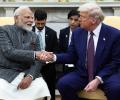
No one should make China an issue in their bilateral relations and their cooperation should not harm the interests of another country, the Chinese Foreign Ministry said on Friday reacting to queries on the meeting between Prime Minister Narendra Modi and United States President Trump.

This is the Tesla CEO's first visit to China in three years.
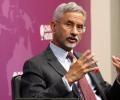
"From President Trump's perspective, the one big shared enterprise that we have is the Quad, which is an understanding where everybody pays their fair share. There are no free riders involved. So that's a good model which works," he said. The Quad alliance consists of the US, India, Australia and Japan.

ITRs with zero tax liability have increased to 55.7 million in FY25.
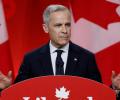
In a dramatic shift in Canada's foreign policy, Prime Minister Mark Carney on Thursday declared that the long-standing economic and security relationship between Canada and the United States has ended, responding to US President Donald Trump's announcement of new auto tariffs that could severely impact Canada's economy, Politico reported.
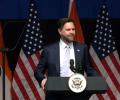
US Vice President JD Vance called on India to drop non-tariff barriers, give greater access to its markets and buy more American energy products and military hardware. Vance, in a speech in Jaipur, highlighted the need for a stronger US-India partnership for a prosperous and peaceful 21st century. He emphasized the importance of working together to address global challenges and praised Prime Minister Narendra Modi, describing him as a "special person." Vance also urged India to provide greater market access to American products and buy more defense platforms and energy from the US. He suggested that India consider dropping some of the non-tariff barriers for American access to the Indian market and highlighted the benefits of closer India-US defense collaboration, advocating for New Delhi to procure more military hardware from the US. He cited the example of American fifth-generation F-35s, arguing they would give the Indian Air Force the ability to defend its airspace and protect its people like never before. Vance also welcomed the Modi government's budget announcement to amend India's civil nuclear liability laws, paving the way for US producers to export small modular reactors and build larger US-designed reactors in India. He emphasized the importance of energy security for India's AI ambitions, stating "there is no AI future without energy security and energy dominance." Vance's visit comes amid growing global concerns over the US's tariff war.

Bangladesh provides huge business opportunties in different sectors and Indian companies should explore areas of investments, Bangladesh Commerce Minister Tipu Munshi said on Tuesday. He said that government policies in Bangladesh are in favour of businesses. "Please do come and invest in Bangladesh," Munshi said in New Delhi while addressing businesses of both the countries.
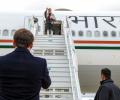
Prime Minister Narendra Modi has concluded his visit to France, which included co-chairing an AI summit and bilateral talks with French President Emmanuel Macron. He is now headed to the US for a bilateral meeting with President Trump. Modi's visit to France included discussions on trade, defense, energy, and cultural linkages. He also inaugurated India's new consulate in Marseille. During his visit to the US, Modi will also interact with business leaders and members of the Indian community.
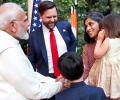
Prime Minister Narendra Modi and US Vice President JD Vance have expressed satisfaction with the progress made in negotiations for a bilateral trade agreement. The two leaders met in New Delhi and discussed a range of bilateral issues, including cooperation in energy, defense, strategic technologies, and other areas. They also exchanged views on regional and global issues of mutual interest.
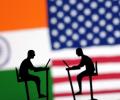
India and the US will sit together in the next couple of weeks to decide on the nature of the proposed trade agreement and finalise its broad contours, a senior official said on Monday. During the recent visit of Prime Minister Narendra Modi to Washington, India and the US announced to more than double the two-way commerce to $500 billion by 2030 and negotiate the first tranche of a mutually beneficial, multi-sector bilateral trade agreement (BTA) by fall of 2025.

The "construct of the DPDP Act" cannot be changed at this stage, though there may be some minor tweaks in the language of the Rules and formats in certain legitimate cases.
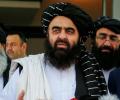
Acting Foreign Minister of Afghanistan, Amir Khan Muttaqi, on Wednesday arrived in Islamabad, his first visit to the country, as part of efforts by the two sides to reset their ties in the wake of the Taliban's takeover of Kabul.

China supplied more than $20 billion worth of arms to Pakistan. These include 20 J-10CE and JF-17 Block III fighter aircraft, Wing Loong drones, frigates, submarines, Hongqi HQ-9P surface-to-air missiles, 240 PL-15E air-to-air missiles, LY-80 air defence systems, ZDK early warning aircraft and other weapons.
India's External Affairs Minister S Jaishankar has expressed concern over information regarding USAID funding in India, calling it "concerning" and hinting at potential "bad faith" activities. Jaishankar asserted that India is looking into the matter and that the country should know who is involved in such activities. He also emphasized the need to expand India's security definition in the digital age, highlighting the influence of technology and narratives on public perception. The statements come amid controversy surrounding USAID funding for certain activities in India, with the US President Donald Trump questioning the agency's funding of voter turnout efforts.
India and the visiting US officials have decided to hold a wrap-up session on Saturday morning to conclude the three-day talks on the proposed bilateral trade agreement, government sources said. They said the discussions are at a "very" early stage.
 © 2026 Rediff.com - Advertise with us - Disclaimer - Privacy Policy - Sitemap - Feedback - About us - Terms of use - Grievances